US
US CA
CA
Check a Texas Plate for Title, Accident, Mileage, and Lien Records
Texas recorded more than 23.6 million registered motor vehicles in 2024, according to the Federal Highway Administration. Whether you are reviewing a used vehicle in Houston, San Antonio, Dallas, Austin, Fort Worth, or elsewhere in the state, a Texas license plate lookup can help you begin identifying the vehicle and reviewing available history when the VIN is not readily available.
Use VinAudit, an approved NMVTIS data provider, to run a Texas license plate lookup. When a vehicle match is available, the report may include NMVTIS information supplied by state titling agencies and other authorized reporting sources.
Key Benefits of a Texas License Plate Lookup
A reverse license plate lookup in Texas can help you review a vehicle’s available history when the VIN is not readily available. VinAudit can match the plate number to a VIN when a match is available and provide access to vehicle history information, including NMVTIS data reported by state motor vehicle titling agencies and other required reporting entities.
- Check title and brand records: Look for reported salvage, rebuilt, junk, or flood title brands before purchasing a vehicle.
- Review odometer history: Compare reported mileage entries and identify possible inconsistencies or rollback indicators.
- Check theft and recovery records: See available reported stolen or recovered vehicle records.
- Review estimated market value: Use available value information as an additional reference when comparing prices or negotiating.
Texas License Plate Rules and TxDMV Services
The Texas Department of Motor Vehicles (TxDMV) oversees vehicle titles, registrations, license plates, motor vehicle dealers, and related vehicle services. Most in-person title and registration transactions are handled through local county tax assessor-collector offices, which work with TxDMV.
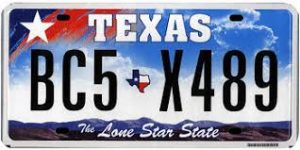
| Issuing Agency | Texas Department of Motor Vehicles (TxDMV), with most local transactions handled by county tax assessor-collector offices |
| General-Issue Plate | Texas Classic design; seven-character alphanumeric patterns vary by series and plate type |
| Plate Display | Front and rear plates for most passenger vehicles; some vehicle classes require only a rear plate |
| Plate Types | General issue, specialty, personalized, military, disability-related, commercial, dealer, farm, trailer, and motorcycle |
| Registration Renewal | Online, by mail, or through a county tax office or approved location, when eligible |
| Replacement Plates | Available through the county tax assessor-collector’s office, generally using Form VTR-60 |
| Plate Transfer | May be transferred between eligible vehicles owned by the same person |
What Happens to Texas Plates When a Vehicle Is Sold?
In a private sale, the seller may remove the license plates and registration sticker. Removed plates may be transferred to another eligible vehicle owned by the seller, retained for a future transfer, or defaced and disposed of to help prevent fraudulent use.
Texas dealer procedures changed on July 1, 2025, when most paper temporary tags were replaced by metal license plates. Specialty and personalized plate holders generally retain those plates, while the handling of general-issue plates depends on the transaction.
VinAudit Lookup vs. Official Texas Motor Vehicle Records
A VinAudit Texas plate lookup is a vehicle-history search. It is not the same as requesting an official title, registration record, ownership record, replacement plate, or registration renewal from TxDMV or a county tax office. For official transactions or confirmation of current Texas title and registration information, contact TxDMV or the appropriate county tax assessor-collector’s office.
Search nearby states: New Mexico, Oklahoma, Arkansas, and Louisiana.
How a Texas License Plate Lookup Works
Use a Texas plate number to begin a vehicle search in three steps:
- Enter the plate number and select Texas. The issuing state is needed because the same plate number may be assigned in more than one state.
- Look for a matching vehicle. When a match is available, the plate number may be connected to the vehicle’s VIN.
- Review available vehicle history. Depending on the vehicle and available records, the report may include title and brand information, odometer readings, accident or damage records, theft records, liens, recalls, and previous sale listings.
Use the report together with the vehicle title, seller-provided documents, an independent inspection, and official Texas records when needed.
Already have the VIN? Start with a direct VIN lookup instead of searching by plate number.
Run a VIN CheckWhen a Texas License Plate Lookup Can Help
A Texas license plate search can be useful when the VIN is not readily available or when you want to compare a vehicle listing with available history records.
- Used car buyers and vehicle shoppers: Use the Texas plate number to look for a matching vehicle, compare the resulting VIN and vehicle details with the listing, and review available history before moving forward.
- Dealers and automotive platforms: Use VinAudit data products and APIs to support plate-to-VIN matching, listing enrichment, vehicle-history checks, fraud review, and other automotive workflows.
Frequently Asked Questions (FAQs)
Is it legal to run a license plate search in Texas?
How does a plate lookup differ from a VIN search in Texas?
Can I see who owns a car through a Texas plate lookup?
Is the information from a Texas plate search accurate and up to date?
Can I run a Texas license plate lookup without the VIN?