

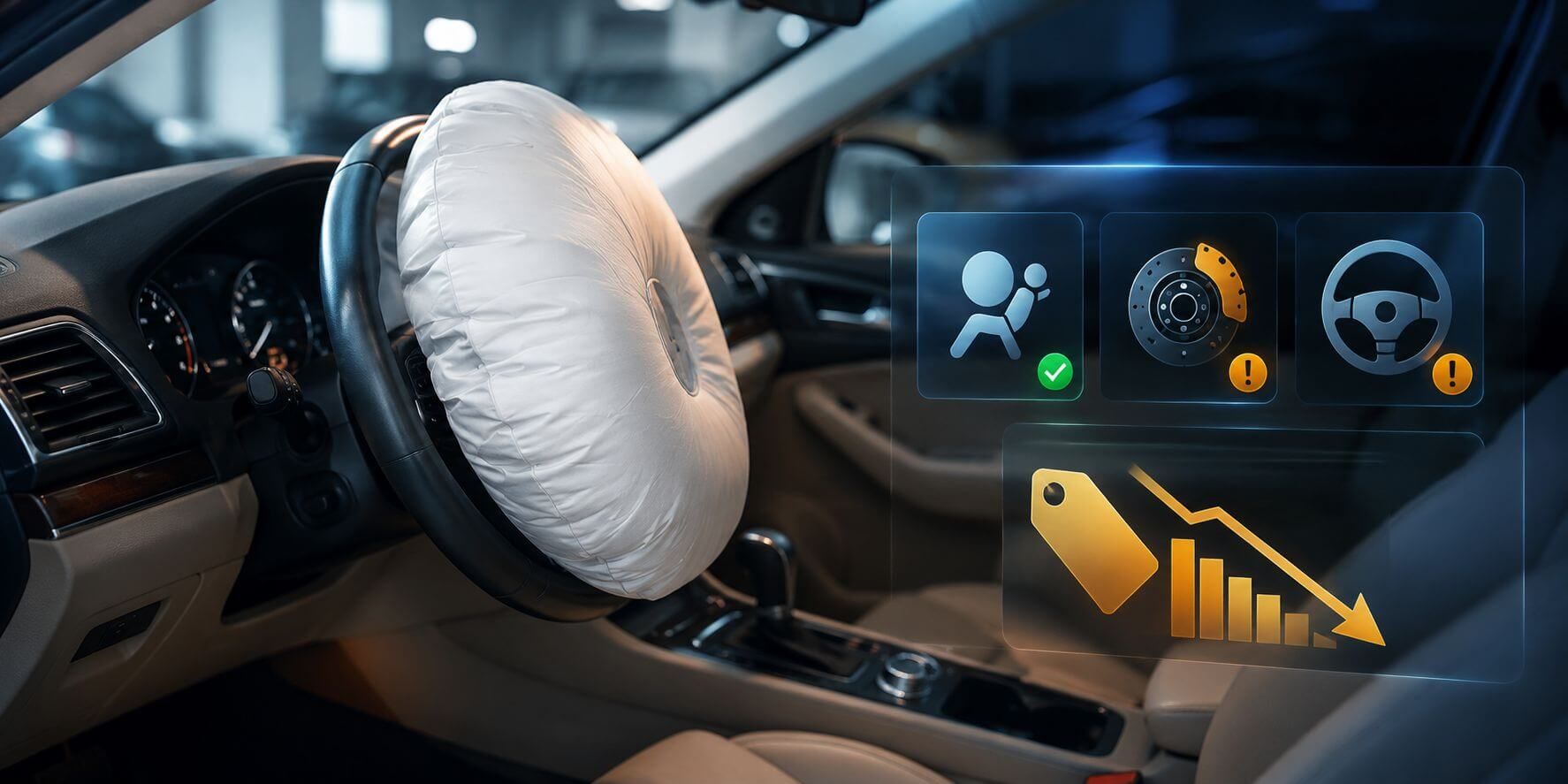
Used car value is not shaped by mileage, age, and condition alone. Safety issues matter too, especially when they involve critical systems like airbags, brakes, or steering.
A recall does not always reduce a vehicle’s value in the same way. In many cases, a repaired recall has much less impact than an open recall. But when the recall affects a major safety system, creates buyer hesitation, delays a sale, or raises questions about how the vehicle was maintained, it can absolutely influence resale value, trade-in confidence, and how quickly the car sells.
This guide explains how airbag recalls, brake recalls, and steering recalls affect used car value, why some recalls hurt more than others, and what buyers and sellers should consider before pricing or purchasing a used vehicle.
Quick Answer
Airbag recalls, brake recalls, and steering recalls can affect used car value because they involve core safety systems.
In general:
- open recalls tend to hurt marketability and buyer confidence more than completed recalls
- critical recalls involving airbags, brakes, or steering often have more value impact than less serious recalls
- Do Not Drive or urgent warnings can affect value much more severely
- completed recall repairs usually reduce the negative impact, but the recall history may still influence some buyers
The biggest valuation issue is often not that the vehicle was recalled, but that the recall is still unresolved.
Why Safety Recalls Affect Value at All
Used car value is partly based on risk.
When buyers compare similar vehicles, they are not just asking which one is cheaper. They are asking which one feels safer, easier to own, and less likely to create extra hassle after purchase. An unresolved recall increases uncertainty in all three areas.
That uncertainty can affect value in a few ways:
- buyers may walk away or negotiate harder
- dealers may hesitate to retail the vehicle as aggressively
- lenders or appraisers may treat the unit more cautiously
- the vehicle may take longer to sell
In other words, a recall can hurt value indirectly through confidence and marketability, even if the mechanical issue itself has not yet caused a visible failure.
Open Recall vs. Completed Recall: The Difference That Matters Most
This is the most important distinction.
A vehicle that had a recall in the past but was properly repaired is usually in a much stronger position than a vehicle with a current open recall. NHTSA’s recall tool is designed to help buyers identify whether a specific vehicle still needs a recall repair, which is the key question in a used-car transaction.
A completed recall can still matter to some buyers if the defect was severe or if it affects the vehicle’s reputation. But in most cases, the value hit is much greater when the issue remains open.
That is why sellers should be ready to show documentation if the recall repair has already been completed.
How Airbag Recalls Affect Used Car Value
Airbag recalls often have a strong effect on used car value because they go directly to occupant safety.
An airbag recall can raise immediate concerns about injury risk in a crash, especially if the defect involves failure to deploy, unintended deployment, or inflator rupture risk. NHTSA’s Takata recall spotlight is the clearest example of how serious an airbag recall can become, including Do Not Drive warnings for some vehicles.
Why the value impact can be significant
- airbags are a core safety feature that buyers expect to work properly
- serious airbag recalls can create strong emotional hesitation
- some airbag recalls remain highly visible in public memory, which affects buyer confidence
- unresolved airbag recalls may make the vehicle harder to retail quickly
When the effect is strongest
The value effect is strongest when the recall is still open, the defect is well known, or the vehicle is under an urgent NHTSA or manufacturer warning.
When the effect is lower
If the airbag recall has already been repaired and the seller can show proof, the impact is usually lower. The stigma may not disappear entirely, but the practical market effect is much easier to manage.
How Brake Recalls Affect Used Car Value
Brake recalls can affect value quickly because buyers understand that braking problems go directly to crash risk.
A brake-related recall may involve hydraulic issues, brake booster failures, software defects affecting braking performance, or other conditions that reduce the vehicle’s ability to stop safely.
Why brake recalls matter to value
- braking issues affect immediate drivability confidence
- buyers may see the vehicle as unsafe even before a mechanic confirms details
- dealers and private sellers may face stronger negotiation pressure
- unresolved brake recalls can make test drives and sales conversations more difficult
Brake recalls often create a sharper negotiation effect because they are easy for buyers to understand. Even a buyer with limited technical knowledge knows that anything affecting stopping distance or brake response deserves caution.
How Steering Recalls Affect Used Car Value
Steering recalls can be especially damaging to confidence because they affect vehicle control.
A steering-related recall may involve power steering failure, steering gear defects, loose components, or software and electrical issues that affect steering assist. For many buyers, steering problems feel high-risk because they suggest loss of control rather than just a repair inconvenience.
Why steering recalls can weigh on value
- steering defects create strong safety concerns
- the issue may affect how comfortable buyers feel during a test drive
- unresolved steering recalls can make the vehicle feel harder to trust even if symptoms are not obvious yet
- value can drop more when the recall is paired with suspension or alignment concerns
As with brake recalls, the market reaction is usually strongest when the recall remains open or the seller cannot clearly explain the repair status.
Do All Safety Recalls Hurt Used Car Value Equally?
No.
A few factors usually determine how much value impact a recall has:
1. Whether the recall is open or completed
This is usually the biggest factor.
2. Which system is affected
Airbags, brakes, and steering usually matter more than lower-priority equipment issues because they involve crash safety and control.
3. Whether there is a Do Not Drive or other urgent warning
NHTSA highlights some recalls as especially critical, including certain Do Not Drive and fire-risk cases. These situations can affect value much more than a routine recall notice.
4. Whether the repair is available
If the fix can be completed quickly and free of charge, the market impact is often easier to manage. If parts are unavailable, the risk to value can be greater because the buyer inherits delay and uncertainty.
5. Whether the recall is part of a bigger pattern of risk
A recall alone may be manageable. A recall plus accident history, flood concerns, poor maintenance, or title issues is a different story.
How Open Recalls Affect Buyers, Sellers, and Dealers Differently
For buyers
An open recall may justify a lower offer, a request that the seller complete the repair before sale, or a decision to walk away if the defect is severe.
For private sellers
An unresolved recall can reduce trust and increase negotiation pressure. The sale may move more smoothly if the seller completes the repair first and keeps proof ready.
For dealers
Open recalls can complicate merchandising, customer confidence, and sales conversations. Even when a used vehicle can legally be sold, an unresolved safety recall may still make it harder to market competitively.
Can a Recall Lower Trade-In Value?
Yes, it can.
A trade-in offer is partly based on what the receiving dealer believes it can do with the vehicle next. If the vehicle has an open recall involving airbags, brakes, or steering, the dealer may factor in repair timing, resale difficulty, or the risk that the unit will be harder to move.
That does not always mean a dramatic trade-in penalty, but it can absolutely affect the offer, especially if the issue is still unresolved.
What Buyers Should Do Before Using a Recall as a Pricing Issue
Before assuming a recall should reduce the price, take these steps:
- check whether the recall is actually open on that specific vehicle
- read the recall description closely
- find out whether the repair is available now
- ask the seller for proof if they say it was already fixed
- evaluate the recall together with title history, mileage, condition, and inspection results
This is where a VIN check is useful. A recall should never be evaluated in isolation from the rest of the vehicle’s background. If you only have plate details while screening a car, a license plate lookup may also help you confirm basic vehicle information before going deeper.
Should You Walk Away From a Recalled Used Car?
Not always.
A completed recall repair usually makes the issue far less serious from a value standpoint. An open recall may still be manageable if the repair is available immediately and the rest of the vehicle checks out well.
But if the recall is severe, unresolved, subject to a Do Not Drive warning, or combined with other red flags, the safer choice may be to walk away.
Final Takeaway
Airbag recalls, brake recalls, and steering recalls can affect used car value because they involve the systems buyers trust most for safety.
The biggest value hit usually comes when the recall is still open, not merely because the vehicle was recalled at some point in the past. Open recalls can reduce buyer confidence, slow down sales, strengthen negotiation pressure, and affect trade-in appeal. Completed recall repairs usually soften that impact, especially when the seller can show proof.
For buyers and sellers alike, the smartest approach is to look beyond the word "recall" and focus on what really matters: whether the defect is still unresolved, how serious it is, and how it fits into the full condition and history of the vehicle.
Frequently Asked Questions
Do recalls lower used car value?
They can, especially when the recall is still open, affects a major safety system, or creates strong buyer hesitation.
Does a completed recall still affect value?
Usually less than an open recall. A completed repair often reduces the practical value impact, though some buyers may still care about the recall history.
Why do airbag recalls affect value so much?
Because airbags are a core occupant-safety system and some airbag recalls, such as certain Takata-related defects, have been associated with serious injury risk and strong public awareness.
Do brake and steering recalls matter more than minor recalls?
Often yes. Buyers typically react more strongly to recalls involving braking and steering because those systems affect direct vehicle control and crash avoidance.
Can an open recall affect trade-in value?
Yes. A dealer may factor in the unresolved recall, repair timing, and the vehicle’s resale difficulty when making a trade-in offer.