

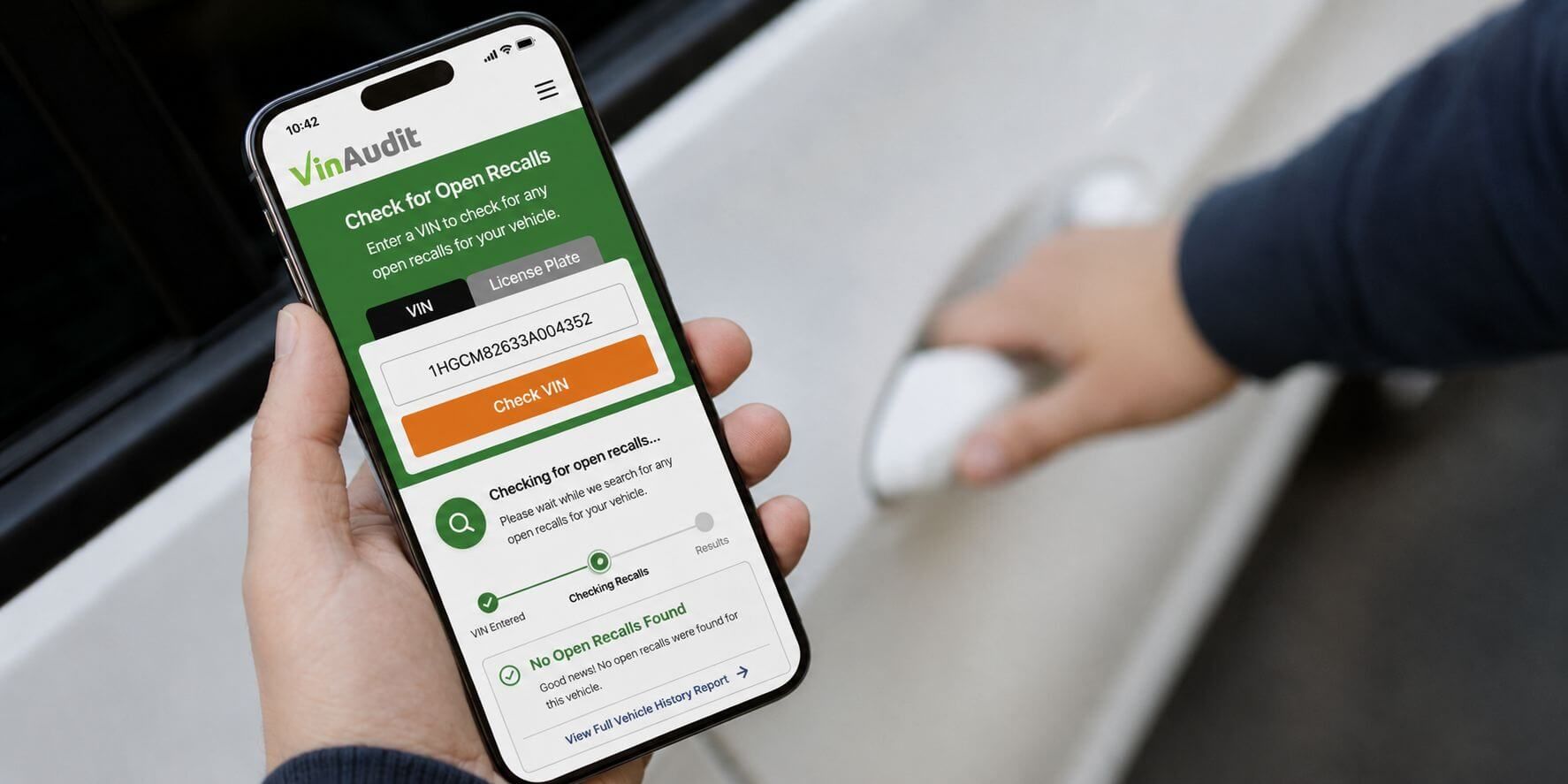
If you are buying a used car, checking for an open recall should be one of your standard pre-purchase steps. It is fast, free, and can reveal whether the vehicle has an unresolved safety problem that still needs repair.
The good news is that recall checks are easy to do. The better news is that they can help you avoid surprises before you commit to a vehicle.
This guide explains how to check if a used car has an open recall before you buy, what an open recall actually means, when it should change your decision, and how to use recall information together with vehicle history and inspection steps.
Quick Answer
To check whether a used car has an open recall:
- Find the vehicle’s 17-character VIN.
- Enter the VIN into the official NHTSA recall lookup tool.
- Review whether the recall is still open or has already been repaired.
- Ask the seller for proof of completed recall repairs if the vehicle was previously affected.
- Combine the recall check with a VIN history review and an independent mechanic inspection before buying.
Why Recall Checks Matter When Buying a Used Car
A recall is issued when a manufacturer or NHTSA determines that a vehicle has a safety-related defect or fails to meet minimum safety standards. Some recalls involve issues that are inconvenient. Others involve systems that can directly affect safety, such as airbags, brakes, steering, fuel systems, or electrical components.
That is why recall checks matter even if the car looks clean, drives well, and comes with a reasonable price. A used vehicle can still have an unresolved recall years after it was first announced.
An open recall does not automatically mean you should reject the car. But it does mean you should understand the risk, confirm what repair is needed, and decide whether the seller has addressed it or whether you would have to handle it after purchase.
Step 1: Find the VIN
The easiest way to check recalls is by VIN.
The VIN is the vehicle’s 17-character identification number. You can usually find it:
- on the lower corner of the windshield on the driver’s side
- on the label inside the driver-side door jamb
- on the title or registration documents
- on insurance paperwork
Make sure the VIN on the car matches the VIN on the paperwork. If it does not, stop and sort that out before going any further.
Step 2: Run the Official Recall Check
Go to the official NHTSA recall lookup and enter the VIN.
This is the most direct way to see whether the specific vehicle has an unrepaired safety recall. A VIN-based recall search is much better than relying only on year, make, and model because it checks the actual vehicle, not just the general vehicle type.
If you already have plate details but not the VIN, a license plate lookup or other vehicle lookup step may help you confirm vehicle information before doing a deeper search.
Step 3: Review the Results Carefully
When the search returns results, do not just look for the word "recall." Pay attention to the status.
You are mainly trying to answer these questions:
- Is there an open recall right now?
- What system is affected?
- Does the issue involve a serious safety risk?
- Is a remedy already available?
- Has the recall been repaired, or is it still unresolved?
Some recalls are more urgent than others. A cosmetic or equipment-related issue is different from a brake, airbag, steering, or fire-risk recall.
Step 4: Ask the Seller the Right Follow-Up Questions
If the vehicle has an open recall, ask the seller direct questions:
- Have you had the recall repair completed?
- Do you have paperwork showing the repair was done?
- If the repair was not done, why not?
- Is the vehicle still being driven regularly?
If the seller says the recall has already been fixed, ask for proof. Do not rely only on a verbal answer.
If the repair has not been completed, ask whether the manufacturer’s dealer has the parts and whether the remedy is currently available.
Step 5: Use Recall Data With the Rest of Your Research
A recall check is useful, but it should not be the only thing you do.
Before buying, also review:
- a VIN check
- title history
- possible accident or salvage records
- mileage consistency
- maintenance records
- a pre-purchase inspection by an independent mechanic
This matters because a car can have no open recalls and still have serious mechanical or history issues. On the other hand, a car with an open recall may still be worth buying if the issue is manageable and the remedy is available at no cost.
What an Open Recall Actually Means
An open recall means the vehicle has been identified as affected by a safety recall and the repair has not yet been completed for that specific vehicle.
In many cases, recall repairs are performed free of charge by an authorized dealer for that brand. But that does not mean the issue is minor or that you should ignore it.
Think of an open recall as a safety flag, not an automatic rejection. It is a sign that you need more information before you move forward.
When an Open Recall Should Make You Pause
An open recall deserves extra caution when:
- it affects airbags, brakes, steering, fuel systems, or fire risk
- the manufacturer has issued a stop-drive or do-not-drive warning
- the parts are not yet available
- the seller is dismissive or evasive about the issue
- the recall is one more problem on top of bad history, poor condition, or weak paperwork
When multiple warning signs stack up together, the safest choice may be to walk away.
Can You Still Buy a Used Car With an Open Recall?
Yes, sometimes.
In practice, it depends on the severity of the recall, whether a repair is available, and whether the overall deal still makes sense. Some buyers proceed if the recall repair can be scheduled immediately and the vehicle otherwise checks out well.
Still, do not treat an open recall lightly. A low asking price does not cancel out a safety risk.
Can Recall Information Help You Negotiate?
Yes. If a vehicle has an unresolved recall, that may affect convenience, timing, and buyer confidence. It can also influence how quickly you are willing to close.
You may be able to ask the seller to:
- complete the recall repair before sale
- provide written proof of repair
- reduce the price if the issue remains unresolved and you will need to handle it after purchase
Recall information is most useful in negotiation when you treat it as part of the full vehicle picture rather than as a standalone talking point.
Common Mistakes Buyers Make
Assuming a clean-looking car has no recalls
Appearance tells you very little about recall status.
Checking only year, make, and model
That may show general recall information, but a VIN search is better because it checks the actual vehicle.
Ignoring older recalls
Recalls do not become harmless just because the vehicle is older.
Skipping the rest of the inspection process
A recall check is important, but it does not replace a vehicle history review or mechanic inspection.
Final Takeaway
Checking for an open recall before buying a used car is one of the simplest and smartest steps you can take. It only takes a few minutes, costs nothing through the official recall tool, and can reveal whether the vehicle still needs an important safety repair.
The best approach is to treat recall checking as one part of a complete used-car buying process. Start with the VIN, run the recall search, review the results carefully, ask the seller for proof when needed, and combine that information with a vehicle history report and independent inspection.
That way, you are not just buying based on price or appearance. You are buying with more confidence.
Frequently Asked Questions
How do I check if a used car has an open recall?
Find the VIN and enter it into the official NHTSA recall lookup tool. The results will show whether the specific vehicle has an unresolved safety recall.
Is an open recall a dealbreaker?
Not always. It depends on the type of recall, whether the repair is available, and whether the rest of the vehicle checks out well.
Are recall repairs free?
In many cases, recall repairs are performed free of charge by an authorized dealer for that vehicle brand.
Can a used car have no recalls but still be a bad buy?
Yes. A recall check is important, but it does not replace a vehicle history review, title check, or mechanic inspection.
Should I ask the seller for proof of recall repair?
Yes. If the seller says a recall was already fixed, ask for service records or other documentation showing the repair was completed.