

Buying a used vehicle is not just about price, mileage, or appearance. Safety should be one of your first filters.
A vehicle can look clean, drive reasonably well, and still have hidden problems that affect crash protection, braking, steering, tires, or recall status. That is why smart buyers do a basic safety review before focusing too much on cosmetics or negotiation.
This guide covers the top safety checks to do before buying a used vehicle, what each one can reveal, and how to combine those checks with VIN-based research and a mechanic inspection before you commit.
Quick Answer
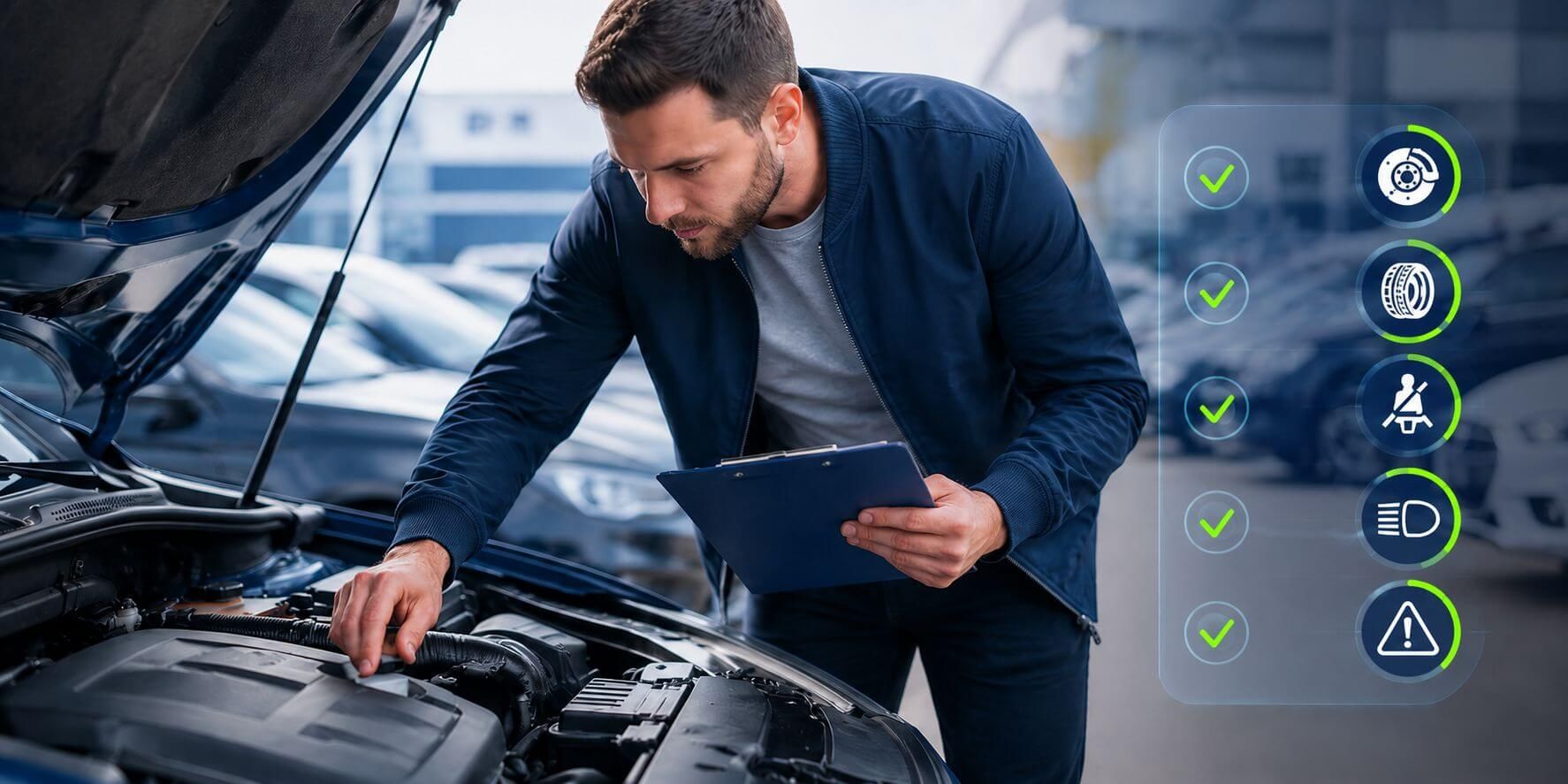
Before buying a used vehicle, check these key safety areas first:
- open recalls
- tires and tread condition
- brakes
- steering and suspension behavior
- seat belts and airbags
- lights and visibility equipment
- warning lights and dashboard alerts
- signs of flood or accident damage
- basic structural condition
- overall inspection by an independent mechanic
A safe used-car purchase is not based on one check alone. It comes from combining recall research, visual inspection, test-drive observations, and independent verification.
1. Check for Open Recalls
A recall check should be one of your first safety steps.
NHTSA’s recall system allows buyers to search by VIN to see whether a specific vehicle has an unrepaired safety recall. That matters because a used car can still have an unresolved recall involving airbags, brakes, steering, electrical fire risk, or other critical systems.
If the vehicle has an open recall, do not ignore it. Read the recall carefully, identify whether it affects a major safety system, and ask the seller whether the repair has already been completed.
A VIN check and a license plate lookup can help you gather background details before deciding how serious the issue is in the full context of the vehicle.
2. Inspect the Tires Carefully
Tires are one of the easiest safety items to check and one of the easiest for buyers to overlook.
Look at tread depth, uneven wear, cracks, sidewall damage, and whether all four tires match in type and size. Uneven wear can point to alignment, suspension, or steering issues. Old or damaged tires can reduce braking ability and traction even if the rest of the vehicle seems fine.
If the tires look badly worn or mismatched, treat that as both a cost issue and a possible safety flag.
3. Test the Brakes
Brakes are one of the most important safety systems on the vehicle.
During a test drive, the car should stop smoothly and predictably. Listen for grinding, squealing, or metal-on-metal sounds. Pay attention to vibration, pulling to one side, or a brake pedal that feels soft, spongy, or unusually hard.
A vehicle that does not brake with confidence should not be treated as a small issue until proven otherwise.
4. Pay Attention to Steering and Suspension
A used vehicle should feel stable and controlled on the road.
During the drive, notice whether the vehicle pulls, wanders, shakes, clunks over bumps, or feels loose when turning. Problems in the steering or suspension can affect control, tire wear, and braking stability.
These issues may not always be visible in a parked inspection, which is why the road test matters.
5. Check Seat Belts and Airbag Indicators
Seat belts and airbags are core safety features, not minor details.
Make sure every seat belt latches, tightens, and retracts properly. Check for damaged belt webbing, broken buckles, or warning lights related to airbags or occupant-restraint systems.
If the airbag warning light stays on after startup, the issue should be investigated before purchase. A vehicle can still drive normally while having a serious restraint-system problem.
6. Check Lights, Signals, and Visibility Equipment
A vehicle’s lights are part of its safety system because they affect both visibility and communication with other drivers.
Check the headlights, brake lights, tail lights, reverse lights, turn signals, hazard lights, and windshield wipers. Also inspect the windshield for cracks, severe chips, or visibility distortion.
Poor visibility or nonworking lighting equipment can make an otherwise decent vehicle a bad buy.
7. Watch the Dashboard Warning Lights
Warning lights should never be ignored just because the seller says they are "nothing serious."
When you start the car, the lights should come on briefly and then turn off as expected. If the check engine light, ABS light, airbag light, traction-control light, or another warning stays on, ask why and get it checked.
A clean test drive does not erase a warning light.
8. Look for Signs of Accident Damage
Past collision damage can affect both value and safety depending on how well the vehicle was repaired.
Look for mismatched paint, uneven body gaps, bent panels, replaced lights, overspray, or signs that major body parts were removed and reinstalled. These clues do not always mean the car is unsafe, but they do tell you to look closer.
If the vehicle has prior accident history, it is especially important to review a vehicle history report and have the structure inspected by a qualified mechanic or body professional.
9. Check for Flood Damage
Flood-damaged vehicles can create long-term safety and reliability problems, especially with electrical systems.
Watch for musty odors, damp carpets, waterlines, hidden mud, corrosion in unusual places, or signs that interior materials were recently replaced. Flood damage is not always obvious during a quick walkaround, which is why it deserves special attention.
Electrical issues caused by prior water exposure can affect everything from lighting to airbags to engine management systems.
10. Check the Vehicle Structure and Underbody
A vehicle’s structure affects crash safety, alignment, and overall road behavior.
You do not need to be a body expert to do a basic check. Look underneath for severe rust, bent components, leaking fluids, or visible damage. If the seller allows it, a mechanic can do a much better underbody inspection on a lift.
Structural problems are one of the best reasons to bring in a professional before buying.
11. Do Not Skip the Independent Mechanic Inspection
This is one of the most important safety checks of all.
The FTC recommends getting an independent mechanic inspection before buying a used vehicle. That advice matters because many serious safety issues are not obvious during a quick test drive or visual walkaround.
A mechanic may find brake wear, suspension problems, fluid leaks, frame issues, warning-code problems, or other defects that change the buying decision completely.
A Simple Used Vehicle Safety Checklist
Before buying, make sure you have covered these safety basics:
- check for open recalls by VIN
- inspect tires and tread wear
- test the brakes
- evaluate steering and suspension during the drive
- check seat belts and airbag warning lights
- verify all lights and wipers work properly
- pay attention to dashboard warning lights
- look for accident and flood-damage clues
- inspect underbody and structural condition when possible
- get an independent mechanic inspection
Why Safety Checks Matter Even on a Cheap Used Car
Some buyers assume that a lower price justifies taking more risk. But safety defects do not become less serious because the car is cheap.
A budget-friendly used vehicle can still be a good buy, but only if the key safety systems are functioning properly and the vehicle does not carry unresolved risks that will be expensive or dangerous later.
The smartest buyers separate cosmetic compromise from safety compromise. A faded bumper is one thing. Bad brakes, open recalls, flood damage, or restraint-system problems are something else entirely.
Final Takeaway
Before buying a used vehicle, focus on the safety checks that actually matter.
Start with recalls, tires, brakes, steering, seat belts, airbags, lights, warning lights, and signs of accident or flood damage. Then confirm your findings with a vehicle history report and an independent mechanic inspection.
That process does more than protect your money. It helps protect you, your passengers, and everyone else sharing the road.
Frequently Asked Questions
What is the most important safety check before buying a used car?
There is not just one. The most important checks usually include open recalls, brakes, tires, steering, seat belts, airbags, and an independent mechanic inspection.
Should I buy a used car with an open recall?
Not always. Some recalls are manageable, but others involve serious safety risks. You should understand the defect, see whether the repair is available, and evaluate it with the rest of the vehicle’s condition.
Are tires really a major safety issue on a used car?
Yes. Worn, cracked, or unevenly worn tires can affect braking, traction, and stability and may also point to alignment or suspension problems.
Why do warning lights matter if the car seems to drive fine?
Because some safety-related issues do not create obvious symptoms during a short drive. ABS, airbag, and other system warnings deserve investigation before purchase.
Is a mechanic inspection still necessary if the car looks good and has no recalls?
Yes. A recall check and visual inspection are useful, but they do not replace an independent mechanic inspection.