

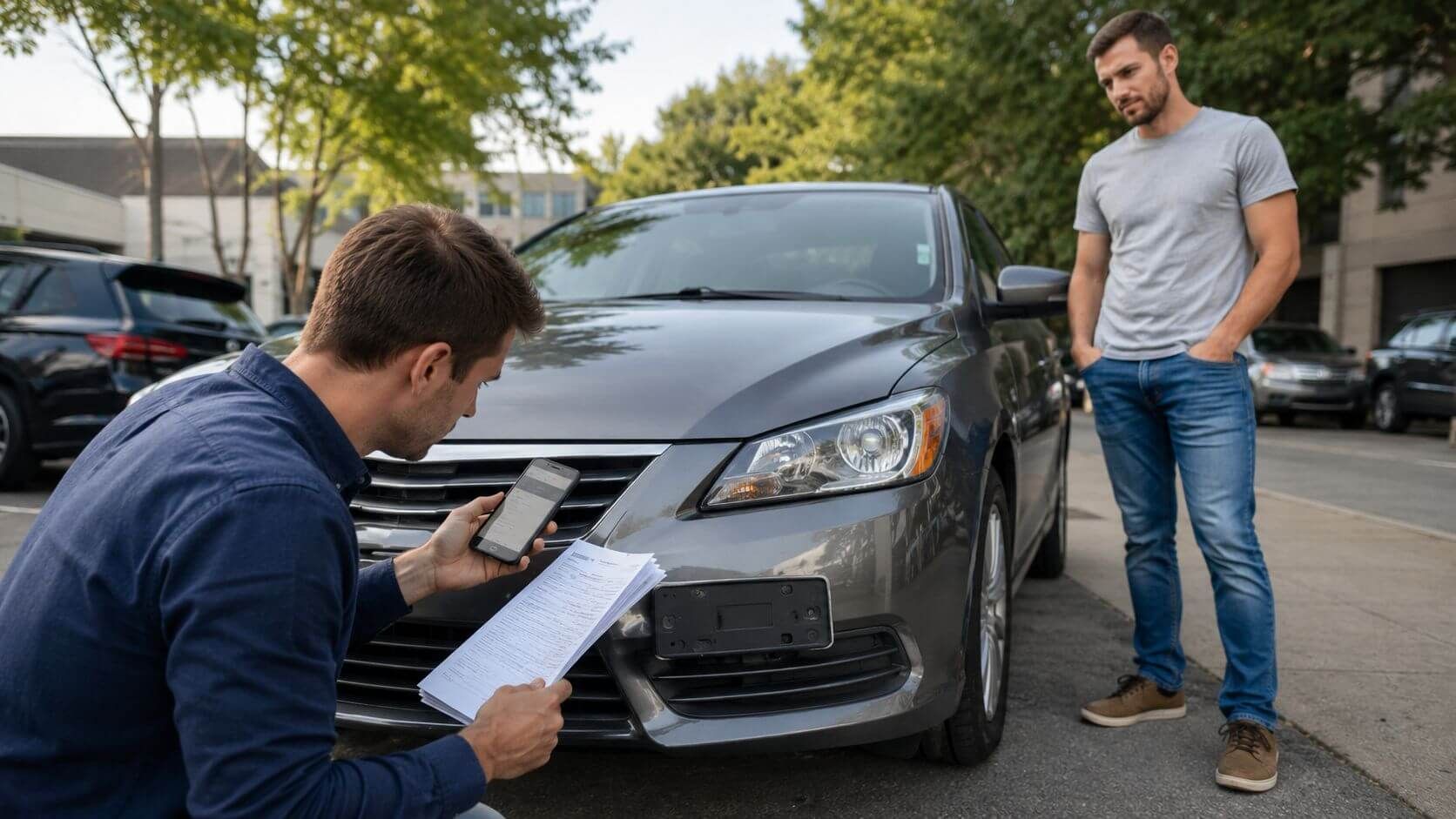
Buying from a private seller can be a good way to save money on a used car. You may avoid dealer fees, negotiate directly with the owner, and get a better sense of how the vehicle was used.
But not every “private seller” is actually a private seller.
Some sellers are curbstoners. A curbstoner is someone who sells vehicles without presenting themselves as a legitimate licensed dealer. They may pose as an ordinary owner, park vehicles in public places, use multiple online listings, avoid proper paperwork, or sell cars with hidden problems.
The danger is not only that the seller may be unlicensed. The bigger risk is that the vehicle may have title issues, odometer problems, undisclosed damage, salvage history, liens, stolen vehicle concerns, or paperwork that does not match the person selling it.
If you are shopping online or meeting a seller in person, this guide will help you spot warning signs before money changes hands.
What Is Curbstoning?
Curbstoning happens when someone sells vehicles as if they are a private seller, even though they may be operating like a dealer or flipping cars without proper disclosure.
The name comes from the practice of parking cars “at the curb” or in public places instead of selling through a licensed business location. Today, curbstoning often happens through online marketplaces, social media listings, local classified ads, and short-term phone numbers.
A curbstoner may claim:
- “I’m selling it for my cousin.”
- “The title is already signed.”
- “I just need it gone today.”
- “I bought it for my wife, but she changed her mind.”
- “I have several cars because I help friends sell them.”
- “The title is clean, don’t worry about it.”
- “You do not need a mechanic to look at it.”
Some of these statements may be true in an honest sale. But when combined with missing documents, repeated listings, pressure, or mismatched information, they become red flags.
Why Curbstoning Is Risky for Buyers
A normal private seller usually sells one personal vehicle. They should be able to explain how long they owned it, why they are selling, where the title is, and what maintenance or problems they know about.
A curbstoner may not have that same history. They may have bought the vehicle cheaply from auction, after damage, with title issues, or from another seller who never completed the transfer.
That can leave you with problems such as:
- Title not properly assigned
- Open title or skipped title transfer
- Salvage, rebuilt, flood, or junk history
- Odometer rollback or mileage inconsistency
- Undisclosed accident damage
- Open lien
- Stolen vehicle risk
- Fake or incomplete paperwork
- No warranty or post-sale support
- Difficulty registering the vehicle
The vehicle may look good during a short test drive, but the paperwork may create problems after purchase.
Use a License Plate Lookup Early
In many online listings, the VIN is hidden but the plate may be visible in photos. If the plate number and state are available, start with a license plate lookup.
This can help you begin checking whether the plate matches the vehicle being advertised. It may also help connect the plate to vehicle details and history information before you even meet the seller.
Use plate lookup early when:
- The listing does not show the VIN
- The seller is slow to provide the VIN
- The plate is visible in listing photos
- The seller gives a plate number first
- You want to compare listing details with vehicle records
- Something about the ad feels inconsistent
A plate lookup is not the final step. You should still confirm the VIN directly from the vehicle and run a history report before buying. But it can help you screen suspicious listings faster.
Red Flags in the Online Listing
Curbstoners often leave clues in the listing itself.
Watch for:
- Multiple vehicles listed by the same person
- Same phone number attached to several car ads
- Listing says “private seller,” but seller has many cars available
- Photos taken in a parking lot, gas station, roadside area, or storage lot
- No clear address or business name
- Very little vehicle history in the description
- Price is much lower than similar cars
- Seller avoids showing the plate or VIN
- Description sounds copied or generic
- Seller wants to move the conversation off-platform quickly
- Vehicle appears in different cities or states
- Title status is not mentioned
One odd detail may not prove anything. But a pattern of vague information, multiple cars, and rushed communication should make you cautious.
Red Flags in the Seller’s Story
When speaking with the seller, ask simple questions and listen carefully.
Ask:
- How long have you owned the car?
- Why are you selling it?
- Is the title in your name?
- Do you have the title with you?
- Has the car been in an accident?
- Are there any liens?
- Can I see service records?
- Can I have the VIN?
- Can I take it for an independent inspection?
- Are you selling any other vehicles?
A real owner should usually be able to answer these questions naturally. A curbstoner may become vague, defensive, or impatient.
Be cautious if the seller says:
- The title is in someone else’s name.
- They are selling for a friend or relative but have no proof.
- They never registered the vehicle.
- They only had the car for a few days.
- They do not know much about its history.
- They cannot meet at their home, workplace, bank, or DMV.
- They refuse an inspection.
- They pressure you to bring cash immediately.
The more distance between the seller and the legal owner, the more careful you should be.
Seller-Verification Checklist
Before buying from a private seller, use this checklist.
| What to Verify | What You Want to See | Red Flag |
|---|---|---|
| Seller identity | Seller’s name matches the title | Seller says title is in someone else’s name |
| VIN | VIN matches dashboard, door sticker, title, and listing | VIN differs across documents |
| Plate | Plate details match the vehicle and state | Plate lookup points to a different vehicle |
| Title | Original title is available and properly assigned | Open title, missing title, duplicate title, or altered title |
| Registration | Current or explainable registration | Registration does not match seller or vehicle |
| Ownership history | Seller can explain how long they owned it | Seller “just got it” and never registered it |
| Inspection | Seller allows independent inspection | Seller refuses or rushes you |
| Payment | Safe payment method and clear receipt | Cash-only pressure or unusual payment request |
| Records | Service and repair records available | No history and no clear explanation |
| Vehicle history | VIN check supports seller’s story | Report shows undisclosed title, theft, lien, or salvage issues |
If several items fail, do not treat it as a normal private sale.
Run a VIN Check Before Paying
After you confirm the VIN directly from the vehicle, run a VIN check.
A VIN check can help reveal:
- Title history
- Title brands
- Active theft records
- Salvage or rebuild records
- Odometer readings
- Past sale listings
- Open lien indicators
- Accident or damage records when available
This is especially important with possible curbstoners because the seller may not disclose the full history. The person selling the car may not even be the person listed on the title.
Compare the VIN report with the seller’s story. If the seller says the vehicle has a clean history but the report shows salvage auction activity, odometer concerns, or title brands, pause before moving forward.
Check for Stolen Vehicle Risk
A curbstoning situation can sometimes overlap with stolen vehicle risk, fake documents, or improper title transfers. Before buying, use a stolen vehicle lookup as part of your screening process.
Be extra careful if:
- The seller refuses to show ID
- The title name does not match the seller
- The vehicle has no plates
- The VIN plate looks damaged or altered
- The price is unusually low
- The seller wants cash only
- The seller refuses to meet at a bank, DMV, or safe public place
If a vehicle later turns out to be stolen, you may lose both the car and the money you paid. That is why stolen-record checks are worth doing before purchase, not after.
Watch Out for Open Titles
An open title is one of the biggest warning signs in a private sale. This usually means the prior owner signed the title, but the current seller never transferred it into their own name.
A curbstoner may use open titles to avoid taxes, fees, licensing rules, or traceability. The problem is that you may have trouble registering the vehicle if the chain of ownership is incomplete.
Be careful if the seller says:
- “Just sign here and you’re good.”
- “The previous owner already signed it.”
- “You do not need my name on the title.”
- “I never registered it, but it is fine.”
- “The DMV will not care.”
Do not accept casual explanations. Title transfer rules vary by state, and mistakes can become expensive.
Use State Vehicle Records When the Paperwork Is Unclear
If something about the title, registration, or seller’s paperwork does not make sense, check official state instructions before buying.
VinAudit’s state vehicle records guide can help you find state-level request instructions, forms, fees, contact details, and portals where available.
This is useful when:
- The vehicle was titled in another state
- The title looks recently issued
- Registration history is unclear
- You suspect title skipping
- The seller cannot explain ownership
- You want to verify state-specific title procedures
- The vehicle has a prior brand or lien issue
A state record request may take more effort, but it can protect you from buying a vehicle that cannot be registered cleanly.
Meeting the Seller Safely
Do not meet in a random, isolated location. A legitimate seller should understand that a car sale involves safety and paperwork.
Better meeting options include:
- Bank or credit union parking lot
- DMV or title office area
- Police station safe exchange zone
- Mechanic’s shop for inspection
- Seller’s residence, if appropriate and safe
- Licensed dealership location, if the seller claims to be a dealer
Before meeting, ask the seller to bring:
- Title
- Registration
- ID
- Service records
- Loan payoff information if there is a lien
- All keys
- Any warranty or repair documents
If the seller refuses normal documentation, leave.
What to Do If You Suspect a Curbstoner
If the seller seems suspicious, do not argue. Protect yourself and step back from the transaction.
You can:
- Stop the purchase.
- Save screenshots of the listing.
- Save messages, phone numbers, and seller details.
- Report the listing to the marketplace.
- Contact your state DMV or consumer protection agency.
- Avoid sending deposits or personal information.
- Move on to a seller who can provide clear paperwork.
There are many used cars available. You do not need to gamble on one with a questionable seller.
Final Takeaway
Curbstoners can make a risky vehicle look like a normal private-party sale. They may hide behind casual stories, vague listings, open titles, mismatched paperwork, or pressure tactics.
The best protection is verification. Start with the plate if the VIN is not available. Confirm the VIN directly from the vehicle. Run a VIN check. Compare the title, registration, plate, and seller ID. Check stolen vehicle records when needed. Use state vehicle records if the paperwork is unclear.
A legitimate private seller should be willing to answer questions, show documents, and allow an inspection. If the seller refuses basic checks, the safest move is to walk away.
FAQs
What is a curbstoner?
A curbstoner is someone who sells vehicles while posing as a private seller, often without proper licensing or disclosure. They may flip cars, avoid title transfer, or hide vehicle problems.
How can I tell if a private seller is actually a curbstoner?
Look for multiple vehicles listed by the same seller, a title not in the seller’s name, vague ownership history, refusal to provide the VIN, pressure to pay quickly, or a seller who will not allow inspection.
Is it safe to buy a car with an open title?
It is risky. An open title may mean the seller never legally transferred ownership into their name. This can cause registration and ownership problems for the buyer.
Should I run a license plate lookup before meeting a seller?
Yes, especially if the VIN is not shown but the plate is visible. A plate lookup can help you screen the vehicle early and compare listing details with available records.
What should I do if the seller refuses an inspection?
Walk away. A seller who refuses a reasonable independent inspection may be hiding mechanical, title, or history problems.