

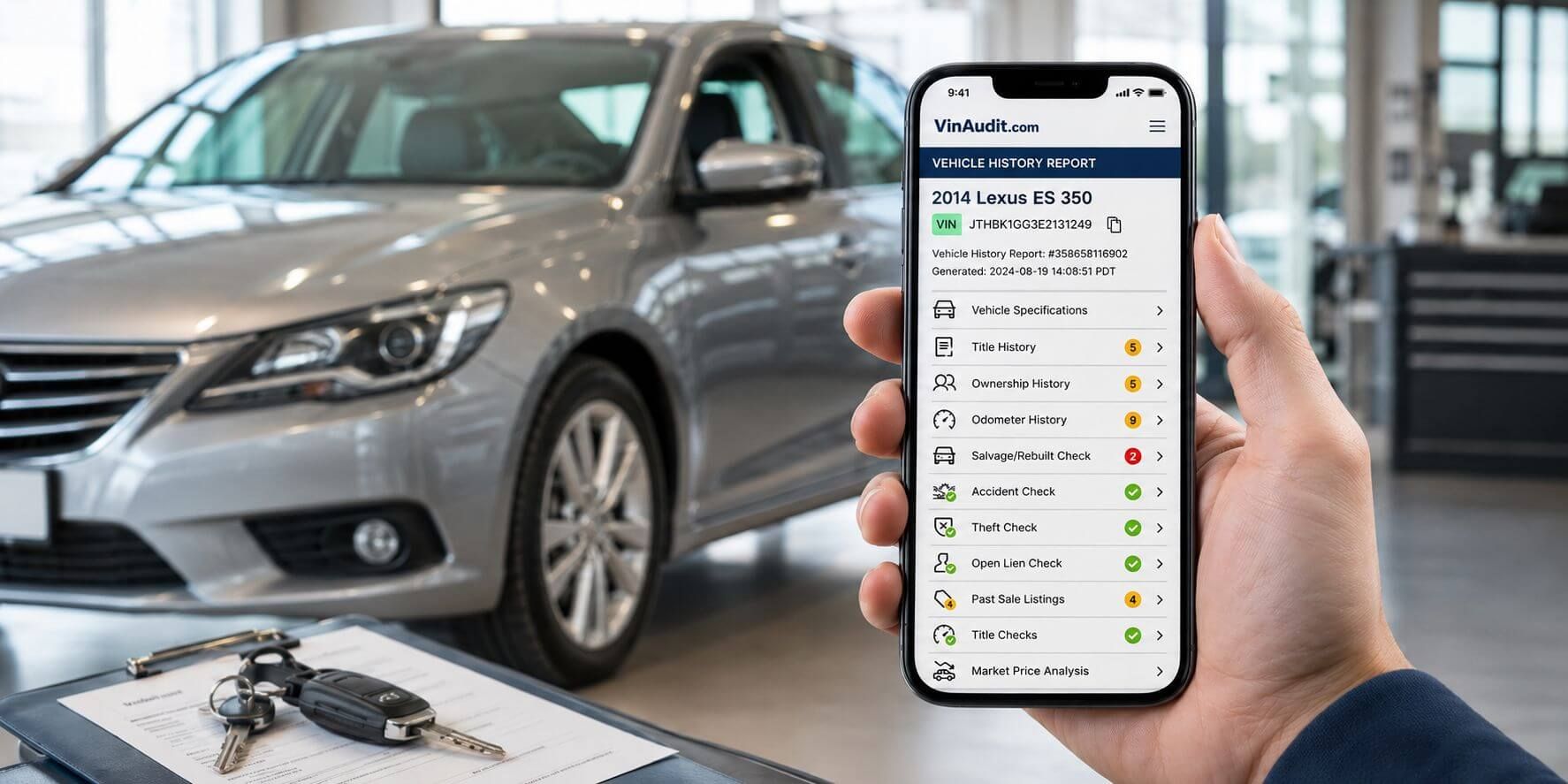
A used car can look excellent in photos and still have a history that changes what it is worth or whether it is right for you. Before arranging a test drive or sending a deposit, checking the Vehicle Identification Number (VIN) can help you identify documented warning signs.
A vehicle history report may show title brands, reported accident or damage events, theft-related entries, and historical odometer readings. A VIN decoder serves a different purpose: it identifies information associated with the VIN, such as the manufacturer, model year, and available specifications. Neither tool guarantees that every past incident will appear.
Below are five issues worth investigating early, what the records may tell you, and the next step to take when something looks wrong.
Quick Answer: What Problems Can a VIN Check Reveal?
| Potential problem | What you may find | What to do next |
|---|---|---|
| 1. Branded title | Salvage, rebuilt, junk, flood, or other reported title brands | Compare title documents and state records; inspect the vehicle |
| 2. Accident or damage history | A reported collision, damage event, or total-loss indicator | Ask for details and arrange an independent inspection |
| 3. Theft-related history | Available theft or recovery entries | Investigate the status and verify the seller's authority to transfer the vehicle |
| 4. Odometer inconsistency | Historical mileage that does not fit the current reading | Compare dated readings and ask for an explanation |
| 5. Open safety recall | An unrepaired manufacturer safety recall identified through an official lookup | Check the VIN at NHTSA and ask about the remedy |
Important distinction: The first four categories may appear in a paid vehicle history report, depending on available reporting sources. For current open recalls, use NHTSA's official VIN recall lookup rather than relying on an older report alone.
1. Salvage, Rebuilt, Flood, and Other Title Brands
A title brand is a designation applied by a state to describe a significant aspect of a vehicle's status or history. Common examples include salvage, rebuilt, junk, and flood. The terminology, requirements, and consequences differ by state.
Why it matters: a branded title may affect insurance options, financing, resale value, registration, and the amount of inspection needed before buying. A vehicle with a rebuilt title is not automatically unsafe, but the brand signals that you should investigate how it reached that status.
The National Motor Vehicle Title Information System (NMVTIS) includes title and brand information reported from participating government and industry sources. Its history can be particularly useful when a vehicle was titled in more than one state, because a brand from an earlier jurisdiction may not be obvious on the current paper title.
Example: The seller describes a car as having a clean title, but a history report shows an earlier salvage brand in another state. Before paying, ask for an explanation and verify the current title and any applicable requirements with the relevant motor vehicle agency.
A VIN check can flag the discrepancy. It cannot prove that the vehicle is currently safe to drive or that the seller has the legal right to sell it.
2. Reported Accidents or Damage
Not every collision leaves visible evidence. Body panels can be repainted, and some damage may be difficult to detect without an inspection. A vehicle history report can provide another perspective by showing accident or damage events that were reported to its data sources.
Depending on the available entry, you might see an event date, reporting source, type of incident, or limited damage details. However, the depth of information varies, and many accidents never appear in a database.
If an accident or damage entry appears:
- Compare the event date and description with the seller's explanation.
- Ask what areas of the vehicle were affected and what work was performed.
- Have a qualified mechanic or collision specialist inspect the car, especially if you suspect structural or flood-related damage.
- Reconsider the asking price only after assessing the actual condition and available evidence.
A report with no accident entry does not mean the car has never been in a collision. Similarly, an accident entry does not, by itself, establish that the vehicle is unsafe. For additional context, see VinAudit's accident lookup by VIN resources.
3. Theft or Recovery Records
A vehicle that has been reported stolen, or later recovered, may have a more complicated history than the seller initially describes. Some vehicle history products include theft-related records where participating sources have supplied them.
A useful free supplemental tool is the National Insurance Crime Bureau's VINCheck. NICB searches available unrecovered-theft and salvage or flood records submitted by participating member insurance companies. It does not search every police database or every insurer, and a no-match result does not certify that a vehicle has never been stolen.
If you find a theft-related entry, establish what it actually means. Was the vehicle recovered? Has its title status changed? Can the seller produce the current title and show that they are authorized to transfer it?
Also inspect the VIN plate or label for signs of alteration and make sure the VIN on the vehicle agrees with its documents. If the identity or ownership situation remains unclear, resolve it through the appropriate state agency before completing the purchase.
Do not treat a VIN report as a stolen-vehicle clearance certificate. Its role is to reveal available information that may require further investigation.
4. Mileage Discrepancies and Possible Odometer Fraud
Odometer readings influence used-car prices because buyers generally associate lower mileage with less use. This creates an incentive for fraud: changing the displayed mileage to make a vehicle appear more valuable.
NHTSA estimates that more than 450,000 vehicles are sold each year with false odometer readings. A vehicle history report can help you compare recorded mileage at different dates, particularly readings associated with available title information.
Consider this illustrative timeline:
| Record date | Mileage shown |
|---|---|
| May 2021 | 48,200 miles |
| August 2023 | 79,600 miles |
| October 2026, seller's dashboard photo | 61,400 miles |
The current reading is lower than the earlier recorded reading. That is a warning sign, not automatic proof of fraud. A transcription error, odometer replacement, or another documented event could also explain the discrepancy.
Before deciding what happened, compare the reported readings, title documents, displayed odometer, and the vehicle's overall wear. Ask the seller for a clear explanation and supporting documents. NHTSA also recommends inspecting physical wear when evaluating a suspicious mileage claim.
A mileage VIN check may help identify inconsistencies in available historical records, but it cannot independently certify the vehicle's actual mileage.
5. Open Safety Recalls
A manufacturer issues a safety recall when a vehicle or component has a safety-related defect or fails to meet an applicable federal safety standard. Some recalls involve critical systems, including airbags, steering, brakes, fuel components, or electrical components.
The best way to check a specific U.S. vehicle is to enter its VIN at NHTSA.gov/recalls. This free lookup identifies unrepaired recalls within the tool's coverage, and should be checked close to the purchase date even if you already have a vehicle history report.
NHTSA notes that its VIN tool does not show every possible recall, including recalls already completed, some newly announced recalls for which affected VINs are still being identified, and certain older recalls. A result of zero unrepaired recalls is therefore not a guarantee that no recall has ever been issued.
If an open recall appears, check the manufacturer's instructions and ask an authorized dealer about the remedy and timing. Safety recall remedies are generally available without charge under applicable federal requirements, but availability and special circumstances should be confirmed with the manufacturer.
An open recall does not automatically make the car a bad purchase. It does mean the safety issue deserves attention before you decide to buy or drive it.
What a VIN Check Cannot Tell You
Even a detailed vehicle history report has limits. It cannot independently establish:
- Whether every accident, flood event, or theft incident was reported.
- Whether the car's engine, transmission, brakes, or electronics are in good condition today.
- Whether past damage was corrected to an acceptable standard.
- Whether every mileage entry is error-free or the current odometer is accurate.
- Whether the seller has valid legal authority to transfer the vehicle.
- Whether the vehicle has no open recalls without a current, official recall check.
The Federal Trade Commission advises used-car buyers to review vehicle history information, obtain an independent inspection, and check recalls. These steps answer different questions and work better together.
A Practical VIN Check Workflow Before You Buy
You do not need to investigate every listing in the same depth. Start with low-cost screening, then spend more effort on vehicles that remain serious candidates.
- Get the VIN. Match it to the dashboard or manufacturer label and the seller's listing. Most modern U.S.-market cars use a 17-character VIN.
- Confirm basic vehicle details. Use a VIN decoder to compare available manufacturer, model year, and other identification details.
- Review available history. Run a VinAudit VIN check to examine available title brands, odometer entries, reported accidents, salvage or total-loss information, and other records.
- Use targeted official tools. Check NICB VINCheck for participating-insurer theft and salvage entries, and NHTSA for open recalls.
- Check the documents. Compare the VIN and history findings with the title, registration, and any necessary lien-release paperwork.
- Arrange an independent inspection. A qualified mechanic can assess current condition and help determine whether a reported warning sign changes the value or safety of the vehicle.
If the history and documents contradict one another, resolve the difference before paying a deposit or signing the purchase agreement.
What to Do When a VIN Check Flags a Problem
A warning sign is a reason to investigate, not necessarily a reason to reject the vehicle immediately.
Start by identifying the exact entry: its date, source, status, and wording. Ask the seller for an explanation, then confirm the relevant details through official documents, the reporting provider, or a professional inspection.
Be particularly cautious when the seller refuses to provide a VIN, will not allow an inspection, cannot explain title discrepancies, or pressures you to pay before verification. Walking away can be the sensible option when important questions remain unanswered.
Frequently Asked Questions
What is the difference between a VIN decoder and a VIN check?
A VIN decoder interprets information associated with the VIN, such as manufacturer and model-year data. A vehicle history VIN check searches available records connected to that vehicle, which may include title brands, historical mileage, and reported incidents.
Can a VIN check reveal a salvage or rebuilt title?
Yes, it may show reported salvage, rebuilt, or other title brands. Coverage depends on available state and industry records. Verify any concern against official title documents and applicable state requirements.
Does a clean VIN report mean the car is accident-free?
No. A report with no reported accident simply means no matching accident entry was found in the records available to that provider. An independent inspection is still important.
Can a VIN check prove that an odometer was rolled back?
Not on its own. Historical mileage entries may show inconsistencies, but recording errors and documented odometer changes can also produce unusual readings. Additional evidence is needed to determine the cause.
Can I check whether a vehicle is stolen for free?
NICB offers a free VINCheck tool for specified theft and salvage records from participating insurers. Its results have coverage limits and do not establish a vehicle's complete theft or legal ownership status.
Does a vehicle history report show open safety recalls?
Some providers include recall-related information or links, but the best current check is NHTSA's free VIN recall lookup. Its results also have stated coverage limitations.
Is a VIN check enough before buying a used car?
No. Use it alongside the title and seller's documents, an official recall search, a test drive when appropriate, and an independent pre-purchase inspection.
Final Takeaway
A VIN check can help you identify five important warning signs early: title brands, reported accidents or damage, theft-related records, mileage inconsistencies, and recall concerns. The information becomes more useful when you understand what each source can and cannot establish.
Run the history check before committing to a purchase, follow up on any discrepancies, and have the actual vehicle inspected. The goal is not to find a car with a perfect-looking report. It is to make a buying decision supported by records, documents, and the vehicle's present condition.