

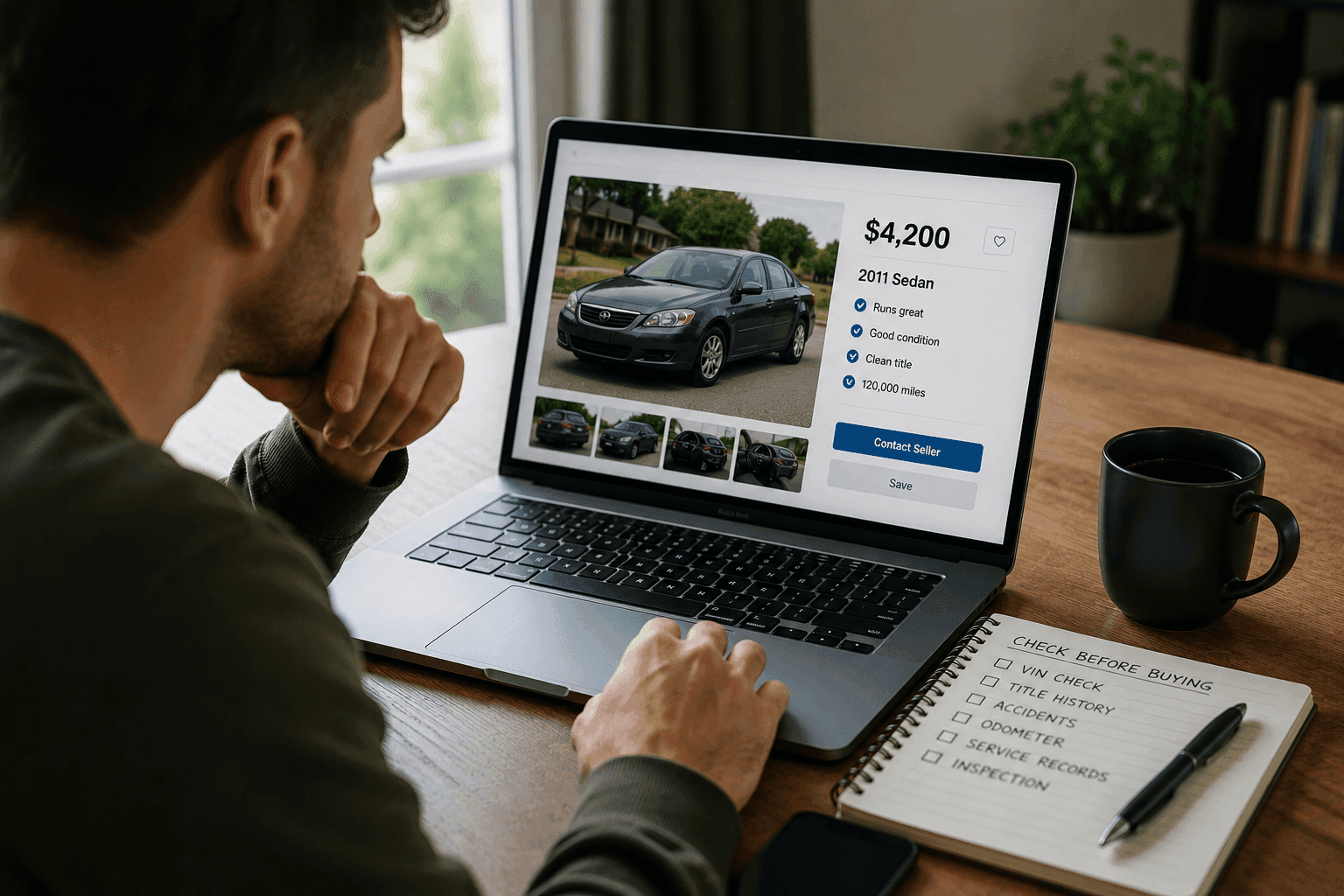
A used car listing can look attractive at first glance and still hide problems that are easy to miss.
A low price, clean photos, and a short description are sometimes enough to get buyers emotionally interested before they have verified anything. That is exactly why listing red flags matter. The sooner you spot them, the easier it is to avoid wasting time on the wrong car.
Some red flags suggest the car itself may have serious issues. Others suggest the seller may be hiding information, misrepresenting the vehicle, or trying to move you too quickly toward a risky deal. Either way, buyers should treat them seriously.
This guide covers the biggest red flags in used car listings buyers should never ignore and explains why each one matters before you message the seller, schedule a meeting, or send a deposit.
Why Listing Red Flags Matter
A used car listing is not just an advertisement. It is often your first chance to judge both the vehicle and the seller.
A strong listing usually feels clear, specific, and consistent. A weak listing often feels vague, rushed, incomplete, or strangely defensive. The problem is not that every imperfect listing is a scam. The problem is that serious issues often leave clues long before you ever see the car in person.
The goal is not to reject a car over one minor issue. The goal is to notice patterns that suggest the deal deserves more caution.
1. The Price Is Far Below the Market for No Clear Reason
A low price always gets attention. That is why it is one of the most common hooks in weak or misleading listings.
If a vehicle is priced much lower than similar cars in your area, ask yourself why. Sometimes the answer is innocent. The seller may need to move quickly, or the car may genuinely have flaws that are already reflected in the price. But when the price looks unusually low and the listing does not explain why, you should slow down.
A too-good-to-be-true price may point to:
- hidden title problems n- accident or flood history
- mechanical issues the seller is not disclosing
- fake or copied listings
- pressure tactics designed to attract fast deposits
A low price is not automatically a dealbreaker, but it is never a reason to skip verification.
2. The Listing Avoids Basic Details
A serious used car listing should answer the basic questions a buyer would naturally ask.
If the description is missing major facts such as the mileage, title status, accident history, trim level, or known condition issues, that is a red flag. A vague listing can make it harder for you to evaluate whether the car is worth pursuing.
Be cautious when the description sounds like this:
- “runs great”
- “clean car”
- “must see”
- “no issues”
- “priced to sell”
Those phrases are not proof of anything. If the seller is willing to praise the car but unwilling to give real details, that tells you something.
3. The Seller Will Not Share the VIN
One of the clearest listing red flags is a seller who refuses to provide the VIN.
A serious buyer should be able to review the vehicle’s background before meeting. If the seller avoids giving the VIN, delays it unnecessarily, or says you can only see it in person, that makes it harder for you to verify the car.
A VIN check can help you review title history, accident records, mileage clues, theft-related issues, and other background details before you invest more time. A seller who blocks that step without a good reason deserves extra caution.
4. The Photos Look Incomplete, Inconsistent, or Suspicious
Photos tell you more than just how the car looks.
Be careful if the listing has:
- very few photos
- blurry or low-quality images
- no interior shots
- no dashboard photo showing mileage
- no close-up shots of flaws
- photos that look copied from another listing or dealer site
Also look for inconsistencies. If the car appears to be photographed in multiple locations, if the lighting and backgrounds do not match naturally, or if the plate and vehicle details seem edited out in odd ways, take a closer look.
A seller who wants top dollar but provides poor photos is already giving you less transparency than you should expect.
5. The Title Status Is Missing or Sounds Vague
Title status is too important to be treated casually.
If the listing does not say whether the title is clean, or if the seller uses unclear wording instead of giving a direct answer, treat that as a reason to ask more questions before meeting.
Watch for phrases like:
- “title in hand” without saying whether it is clean
- “rebuilt but drives perfect”
- “easy fix” or “minor damage only”
- “selling for family member” without matching paperwork
A clean-looking car with title issues can turn into a much riskier purchase than the listing suggests.
6. The Description Does Not Match the Photos or Features
A listing should be internally consistent.
If the description says the car is in excellent condition but the photos show worn seats, body damage, mismatched paint, or warning lights, pay attention. If the seller claims a certain trim or feature package that does not seem to match the photos, that also deserves scrutiny.
These mismatches may reflect carelessness, but they can also signal that the listing was copied, rushed, or intentionally written to sound stronger than the vehicle really is.
7. The Seller Uses Pressure Language Too Early
Pressure is one of the most common warning signs in used-car buying.
Be cautious if the listing itself already pushes urgency with lines like:
- “first person with cash takes it today”
- “many people coming to see it”
- “send deposit now”
- “I won’t hold it unless you pay first”
A motivated seller is normal. But heavy urgency before you have even asked basic questions often suggests that the seller wants you to move faster than your due diligence should allow.
8. The Seller Wants a Deposit Before You Verify Anything
This is a major warning sign.
A seller who asks for money before you see the car, review the paperwork, or verify the vehicle history is asking you to take unnecessary risk. Even small deposits can be enough to pull buyers into a bad situation once emotions get involved.
Before any money changes hands, you should know:
- who owns the vehicle
- whether the title is ready
- what the VIN shows
- whether the car is actually worth seeing
If the listing jumps too quickly to payment, step back.
9. The Mileage Sounds Good but Not Believable
Low mileage gets attention, so it is often emphasized heavily in listings.
That does not mean the mileage is false, but it does mean you should verify it. If the odometer reading looks unusually low for the car’s age and the seller offers no explanation, that should lead to more questions.
Mileage should make sense alongside:
- the vehicle’s age
- the wear shown in photos
- the seller’s story
- the records you can verify later
A license plate lookup may also help you start narrowing down the vehicle details if you need another path before deeper review.
10. The Seller Avoids Mentioning Mechanical Issues Entirely
No used car is perfect, and serious sellers usually understand that buyers expect some honesty.
A listing that makes the car sound flawless while saying nothing about recent maintenance, known flaws, or current needs can be a red flag. Even strong used cars usually have something worth mentioning, whether it is new tires, a recent battery, a small cosmetic flaw, or a maintenance item already handled.
Silence is not proof of a problem, but when a listing feels polished without feeling honest, that deserves caution.
11. The Story Around the Sale Feels Strange or Overexplained
Some listings rely on dramatic stories to justify unusual conditions.
Examples include sellers claiming they are overseas, selling on behalf of someone else without clear paperwork, or giving long emotional explanations instead of simple answers. A real seller may have a perfectly valid reason for selling, but the story should still line up with the paperwork and the listing details.
The more complicated the story becomes, the more carefully you should verify everything else.
12. The Seller Refuses an Inspection Before You Even Meet
A private seller does not have to agree to everything, but a complete refusal to allow a pre-purchase inspection is a strong warning sign.
If the seller is already telling buyers that no inspection will be allowed under any circumstances, you should ask yourself why. Even if the car looks fine in the listing, a seller who discourages inspection may be hoping the buyer will decide emotionally instead of carefully.
What Good Listings Usually Look Like
A stronger used car listing usually includes:
- clear mileage
- direct title status
- useful photos inside and out
- honest description of condition
- straightforward explanation of major features
- willingness to provide the VIN
- pricing that makes sense relative to the market
A good listing does not need to be perfect. It just needs to feel open, specific, and internally consistent.
A Smarter Way to Respond to a Suspicious Listing
If the listing is interesting but has a few warning signs, do not ignore it and do not overreact. Screen it properly.
Before you agree to meet, ask:
- is the title in your name and ready to transfer
- what is the VIN
- what is the exact mileage
- has the car had any accidents or major repairs
- are there any warning lights or current mechanical issues
- would you allow a pre-purchase inspection if everything else looks good
The seller’s answers often tell you more than the original listing did.
Final Takeaway
Used car listings often reveal more than sellers intend.
A suspicious price, missing details, poor photos, vague title language, unwillingness to share the VIN, pressure tactics, deposit requests, and story mismatches are all warning signs buyers should take seriously. Any one of these may still have an innocent explanation, but several together usually mean the vehicle deserves much more caution.
The smartest buyers do not wait until they are standing next to the car to notice red flags. They use the listing itself as the first filter.
Frequently Asked Questions
What is the biggest red flag in a used car listing?
One of the biggest red flags is a seller who will not provide the VIN, because that prevents you from verifying the vehicle before meeting.
Is a very low price always a scam?
Not always, but it should always make you ask why. A low price may reflect real flaws, hidden issues, or a misleading listing.
Should I avoid a used car listing with few photos?
Not automatically, but incomplete or poor-quality photos reduce transparency and make it harder to judge the vehicle honestly.
Why does title language matter in a used car listing?
Because vague or missing title information can hide serious issues such as salvage, rebuilt, or flood history.
What should I do before meeting a seller from a suspicious listing?
Ask for the VIN, confirm the title status, verify the mileage, ask about accidents and current problems, and make sure the seller is open to a pre-purchase inspection.