US
US CA
CA
Businesses searching for a Carfax API are usually looking for a way to access vehicle history, VIN, title, accident, valuation, or other vehicle data inside their own workflow. This may include dealer systems, marketplace platforms, insurance workflows, lending tools, remarketing systems, inventory tools, or internal business applications.
CARFAX offers business and partner programs for different vehicle history and automotive data use cases. For third-party integrations, businesses should contact CARFAX directly through its official business or partner channels to confirm current availability, access rules, pricing, technical requirements, and permitted use.
This guide explains what businesses should look for when comparing vehicle data API options, including CARFAX business solutions and independent alternatives such as VinAudit.
Disclosure: VinAudit.com is independent and is not affiliated with, sponsored by, or endorsed by CARFAX. CARFAX is a trademark of its respective owner. References to CARFAX are used for factual identification and comparison only. VinAudit does not provide CARFAX reports, CARFAX API credentials, or access to CARFAX data.
CARFAX publicly provides business and partner channels for dealerships, financial institutions, insurance companies, government agencies, and other organizations. If your business specifically needs CARFAX data, CARFAX reports, or CARFAX integration access, the safest next step is to contact CARFAX directly.
Product names, technical options, access rules, and eligibility may change. Businesses should verify current API or integration availability directly with CARFAX before planning development work around CARFAX products.
- CARFAX partner information: View CARFAX partner page
- CARFAX business subscriptions: View CARFAX business support page
- CARFAX for dealers: View CARFAX for Dealers
When evaluating a vehicle data API, businesses should compare the actual data, format, access method, support, pricing, permitted use, and use case fit. Depending on the provider and available data, vehicle APIs may help with:
- Vehicle history reports: Accident, title, odometer, theft, registration, recall, salvage, lien-related, or other vehicle history signals where available.
- VIN decoding: Year, make, model, trim, body style, engine, equipment, and other specifications tied to the VIN.
- Market value: Estimated low, average, and high vehicle values based on available vehicle details, market activity, and comparable sales data.
- Ownership cost data: Estimated ownership cost signals such as depreciation, fuel, maintenance, repairs, insurance, and related expenses where supported.
- Inventory screening: Data that may help dealers, marketplaces, lenders, insurers, or fleet operators review vehicles before listing, financing, underwriting, or resale.
- Fraud and risk checks: Signals that may help identify possible odometer inconsistencies, title issues, theft records, lien concerns, or unusual vehicle activity.
Not every provider offers the same data, and not every vehicle will have the same record coverage. Data availability can vary by VIN, state, jurisdiction, source, reporting partner, and update schedule.
VinAudit provides vehicle data API options that may help businesses access vehicle information through their own applications, websites, internal tools, or customer workflows. Depending on the API and account configuration, data may be available through structured formats such as JSON, XML, or downloadable PDF reports.
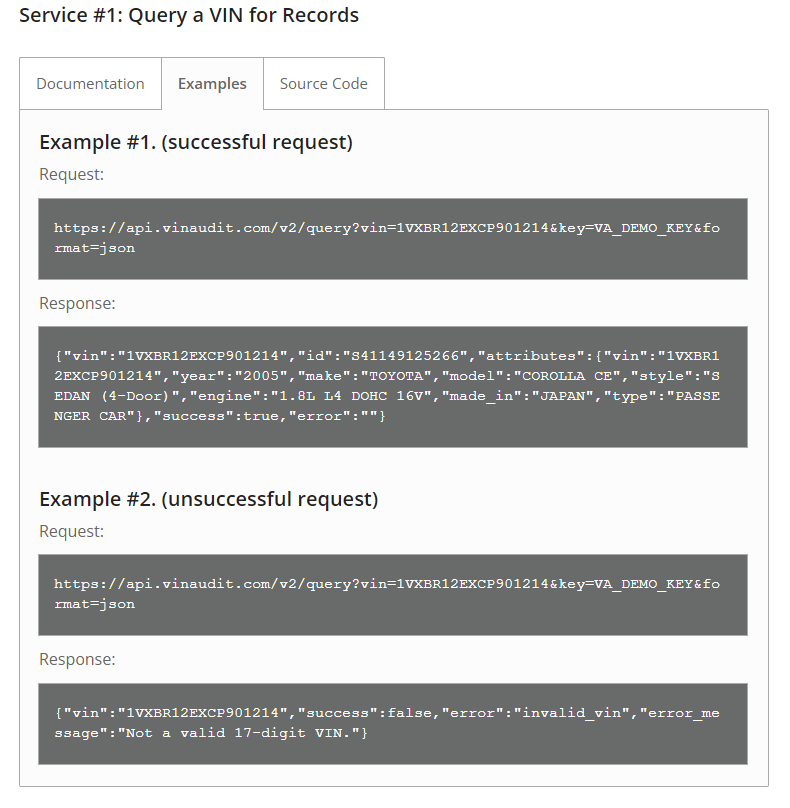
- Vehicle History API: Provides access to vehicle history data behind VinAudit vehicle history reports, covering available data for vehicles in the United States and Canada.
- Vehicle Specifications API: Provides vehicle specification data such as attributes, color options, equipment details, recall information, warranties, and photos where available.
- Vehicle Market Value API: Provides estimated low, average, and high vehicle values based on available market and sales data.
- Vehicle Ownership Cost API: Provides estimated ownership cost data based on a vehicle’s VIN, including categories such as depreciation, insurance, fuel, maintenance, repairs, and related costs where supported.
- Automotive Market Data Feeds: Provides vehicle listing, pricing, and market data feeds for businesses that need broader inventory, pricing, or sales data access.
API access may require a configured account, approved use case, and the correct access permissions for the data product requested.
Choosing the right vehicle data API depends on your business needs, data coverage requirements, integration setup, budget, and permitted use of the data. Businesses should compare documentation, available fields, response formats, technical support, pricing, and testing options before selecting a provider.
VinAudit vehicle data APIs may be a practical option for businesses that need VIN-based vehicle information for internal tools, customer-facing platforms, dealer workflows, inventory screening, valuation tools, or vehicle research products.
- Documentation and interface: VinAudit provides API documentation and product-specific pages that explain available endpoints, parameters, and response options so developers can better understand how each API may fit into their workflow.
- Flexible formats: Depending on the API and account configuration, vehicle data may be available through structured formats such as JSON, XML, or downloadable PDF reports.
- Business use case support: VinAudit APIs can support a range of vehicle data needs, including vehicle history, specifications, market value, ownership cost, and market data workflows.
- Technical support: VinAudit can help businesses review available options and identify which vehicle data product may fit their use case.
- Testing and integration planning: Businesses can review documentation, test available functionality, and confirm the data fields needed before building the API into a live product or workflow.
Before choosing any provider, confirm the data coverage, update schedule, pricing, permitted use, and technical requirements for your specific business case.
Vehicle data APIs can be useful, but no API or vehicle history provider can guarantee that every accident, repair, lien, title issue, theft record, odometer event, recall, registration change, or service record will appear.
Data may depend on what was reported, when it was reported, which jurisdiction handled the record, which sources are available, and how the provider processes updates. Businesses should design their workflows so that missing or incomplete data does not create a false sense of certainty.
The phrase “Carfax API” usually refers to business or integration-based access to CARFAX products. Businesses that need CARFAX data, reports, credentials, or integration access should contact CARFAX directly through its official business channels.
For businesses comparing vehicle data API options, VinAudit provides independent API products that may support vehicle history, specifications, market value, ownership cost, and market data workflows depending on the account and data product selected.
Use this guide to compare API options, confirm current provider terms, and choose the vehicle data solution that fits your business workflow.